Friday, May 31, 2013

Insuring Your Golf Cart

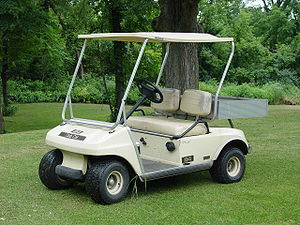
Cape Cod is home to a few gated communities, condominium complexes, golf courses, and exclusive country clubs. If you own a golf cart for personal use, having the proper coverage is a necessity. A personal golf cart might be your means of moving about your community, a way to get to and from your private beach, getting from green to green on the links (if you can hit them), or just a toy to use at your estate. Whatever the case may be, it is never a bad idea to be properly covered.


Golf cart coverage can protect you in the event of bodily injury or death to someone else because of a golf cart accident. If you rear-end the foursome in front of you on the way to the 18th, you are held responsible for any injuries that occur. Bodily injury liability coverage for your golf cart can protect you from financial loss, legal costs, and bail bond expenses associated with your accident. While a golf cart might seem harmless, accidents and injuries are no joke. If you put a ding in that foursome’s shiny new cart, property damage coverage will protect you against the liability of causing damage to someone else’s property.

If you find yourself upside-down in a sand trap with a few bumps and bruises, golf cart insurance will cover your medical expenses up to selected limits, provided those expenses are reasonable and necessary. Coverage will also include medical care, recovery, rehabilitation, and remedial care. Though I make light of golf car accidents, they do happen. People have been seriously injured and killed because of misuse of golf carts. Take your need for speed to the racetrack!

Golf cart insurance also includes underinsured/uninsured bodily injury coverage. Underinsured/uninsured coverage will pay benefits to your and/or your passengers if you are struck by a golf cart driver who does not have insurance, a golf cart driver whose insurance coverage is less than the loss that results from the accident, or a hit and run golf cart operator that speeds away before they can be identified.

Like an automobile, golf carts are covered in the event of a collision, fire, theft, riot, windstorm, or hail. Should your gated community erupt into riot, and your golf cart becomes collateral damage, be not afraid for you are covered. If your cart incurs damage in the event of any of the above, you could receive up to the cash value of your cart minus your deductible. If your cart is rendered inoperable, coverage extends to the towing and labor associated with moving your cart. Yes, they will pull your cart out of the sand trap, but you might have to foot the bill for the donut marks on the fairway.

Whether you use your cart or the course or in your neighborhood, you should considering golf cart insurance. It might seem frivolous to do so, you need to protect your investments. Carts can cost up to $7,000, it would be a shame to lose that investment because you did not think to buy insurance!

Like us on Facebook and Follow us on Twitter!
Visit our website to see the services we can offer you! www.mmisi.com

Friday, May 24, 2013

Reasons You Need Long-Term Care Coverage


Long-Term Care is hardly on the average person’s mind until it comes time to use it. Today, up to 70% of people 65 and older will need Long-Term Care at some point, and if they are not insured for it, they will be required to pay out of pocket. Long-Term Care costs continue to skyrocket, driving up the need to purchase Long-Term Care insurance.

Without insurance, Long-Term Care recipients would need to possess assets that generate $100,000 to $150,000 in additional funds specifically set aside for Long-Term Care. A vast majority of people do not have these kinds of assets or funds available, deflecting the costs of Long-Term Care to family members, if available. Given the structure of Long-Term Care plans, purchasing Long-Term Care insurance at an early date can provide a world of benefits.

Applying for Long-Term Care insurance early can increase your odds of getting coverage and can increase the value of your plan. Nearly 57% of those over the age of 80 that apply for Long-Term Care insurance are denied coverage. Only 11% of those between 50 and 59 are denied. Do not wait to purchase insurance until it is too late.
 
Purchasing Long-Term Care insurance is like getting a lump sum that you can dip into whenever necessary. If you purchased a policy valued at $600,000 and used $30,000 for whatever reason, you would still have $570,000 leftover to use. When 20% of insured’s require more than 5 years of Long-Term Care, insurance is a worthwhile investment. Buyers also have the option of including inflation protection to guard against rising price indices. As policies operate using daily benefit limits, inflation protection increases these benefits as price levels change. In addition, Long-Term Care insurance plans offer the option of either reimbursement or indemnity benefits. Reimbursements benefits cover actual expenses up to a daily limit, whereas indemnity provides a specific daily amount.

Odds are that at some point in your life, you will need Long-Term Care. Why absorb the costs of the care yourself? At Murray & MacDonald, we have available some of the most renowned Life and Long-Term Care insurance companies including John Hancock, Met Life, and Guardian Life; and certified professionals to serve your needs.

Like us on Facebook
Follow us on Twitter
Visit us at www.mmisi.com

Wednesday, May 22, 2013

Car Seats & Installation

The other day we wrote about using a car seat after a car crash, but what about the day-to-day using a car seat.

Which car seat is right for my child?
What are the "proper" ways to install a car seat?
Who should install the car seat?
How long should a child be rear-facing?
When do you turn a child forward facing?
How long can my child use the car seat?
When should I replace the car seat?

Car seat issues are enough to make your head spin.

We, at Murray & MacDonald Insurance, are licensed insurance agents, we are not licensed car seat installers, testers, etc. We do know a thing or two about safety & car seats.

Today, we're going to share a few reference sites that may help you  answer some of your #carseatangst questions.

1) Which car seat is right for my child? This is a tricky one. It's personal preference, it's the car you drive, it's your lifestyle. Some people love the flexibility of an infant seat while their baby is young, others prefer to use a convertible seat that you don't take in & out.

2) What are the "proper" ways to install a car seat? The link in the question will direct you to a website called www.safercar.gov - they list the correct way to install a car seat with and without the latch.

3) Who should install the car seat? If you don't trust yourself, a car-seat technician can install it, find one here. But, if you are the care-giver on a regular basis, you should learn how to properly install the car-seat. This will give you peace of mind your little one is protected. There are many car seats out there that are much easier to install than they used to be!

For the last 4 questions from above, you should reference the manual. Many car-seats have an expiration date. The car-seats will also state if they are meant for rear-facing or forward-facing and for how long.

The recommendations from Safercar.gov are follows:
  • Birth - 12 months - Your child under age 1 should always ride in a rear-facing car seat. There are different types of rear-facing seats: Infant-only seats can only be used rear-facing. Convertible and 3-in-1 car seats typically  have higher height and weight limits for the rear-facing position, allowing you to keep your child rear-facing for a longer period of time.
  • 1 - 3 years - Keep your child rear-facing as long as possible. It's the best way to keep him or her safe. Your child should remain in a rear-facing car seat until he or she reaches the top height or weight limit allowed by your car seat's manufacturer. Once your child outgrows the rear-facing car seat, your child is ready to travel in a forward-facing car seat with a harness.
  • 4 - 7 years - Keep your child in a forward-facing car seat with a harness until he or she reaches the top height or weight limit allowed by your car seat's manufacturer. Once your child outgrows the forward-facing car seat with a harness, it's time to travel in a booster seat, but still in the back seat.
  • 8 - 12 years - Keep your child in a booster seat until he or she is big enough to fit in a seat belt properly. For a seat belt to fit properly the lap belt must lie snugly across the upper thighs, not cross the neck or face. Remember: your child should still ride in the back seat because it's safer there.

Check out the Facebook page and the Twitter page for more on Child Passenger Safety.

Here are a few videos on rear-facing car crash impacts vs forward facing:
Trygg Trafikk Youtube Video comparison of rear vs forward facing
Youtube video of child who was injured in an accident


Friday, May 17, 2013

Massachusetts' Low Auto Rates!


To say that insurance shoppers aren’t price sensitive in today’s economic turbulence would be a drastic understatement. The introduction of direct-writers into the insurance market has made purchasing car insurance easier and cheaper. Fortunately, for Massachusetts drivers, the state was recently graded as one of the cheapest states to purchase insurance.

Carinsurancequotes.com recently ran a comparison of car insurance rates relative to median household income across all fifty states and found some staggering results. Michigan drivers were paying, on average, 8 percent of their household income for insurance. In Michigan, 2010 median household income was $45,413 meaning drivers were paying, on average, $4,087.18 per year for car insurance. Louisiana was the second most costly state, with drivers paying a rate of 5 percent of median household income. Median household income in 2010 for the state of Louisiana was $42,505 meaning drivers paid $2,125.25 for insurance.

Massachusetts falls on the complete opposite side of the spectrum with a rate of only 1.434% of median household income. Massachusetts median household income for 2012 was $62,072, significantly higher than that of the aforementioned states. As a rate of 1.434%, Massachusetts drivers shelled out, on average, $890.11 for car insurance.

For price sensitive shoppers, it pays to live in Massachusetts!

Like us on Facebook
Follow us on Twitter
Visit us at www.mmisi.com

Wednesday, May 15, 2013

Using a Car Seat After an Accident

Have you been in an accident before? Chances are, you've been in one or witnessed one.
Here is a link to traffic accidents & fatalities over a 10 year period.

Accidents are scary and can cause serous injuries.

Have you been in an accident with a small child? A child in a car seat? Hopefully you haven't, but if you have...

What do you do? What happens?

{image}
After the crash, the people get checked out for injuries and the car is brought to a body shop for repairs.

But what do you do about the car seat? It still looks good. Is it ok to use?


It depends, most likely not, according to Nation Highway Traffic Safety Administration.
Below is what NHTSA says about using a car seat AFTER a crash:

"[A car seat should] be replaced following a moderate or severe crash in order to ensure a continued high level of crash protection for child passengers. Car seats do not automatically need to be replaced following a minor crash.

What defines a minor crash? A minor crash is one in which ALL (emphasis MMISI) of the following apply:
  • The vehicle was able to be driven away from the crash site.
  • The vehicle door nearest the car seat was not damaged.
  • None of the passengers in the vehicle sustained any injuries in the crash.
  • If the vehicle has air bags, the air bags did not deploy during the crash and
  • There is no visible damage to the car seat.

Never use a car seat that has been involved in a moderate to severe crash. Always follow manufacturer’s instructions."

The question - will insurance cover it? Insurance will usually cover a car seat, however it depends from company to company. Check with your insurance agent if you have a concern. Our agency has not had a problem with insurance companies replacing a car seat that was involved in a moderate or severe crash.