Wednesday, July 3, 2013

DriveWise and Snapshot: Dollars for Data

What if your car insurance rate was truly dependent on how well you drive? I’m not just talking about number of years without a traffic accident or speeding violation, I’m talking about a comprehensive report card and a driving score that is produced after every road trip. There’s been an interesting trend in the auto insurance industry of late as companies have been examining ways to create usage-based coverage. Everyone thinks of themselves as safe drivers and with usage based rates, they’ll have the chance to prove it. Leading the way with this initiative is Allstate’s DriveWise program and Progressive’s Snapshot.

The Products

The DriveWise plugs in underneath the steering column
DriveWise is a program that provides savings based on driving patterns and also provides feedback via an online performance report. The potential for savings is significant, with 10% off the premium just for using the device and up to a 30% discount based on your Performance Rating. The Performance Rating is calculated on four main factors: low mileage, safe speed, safe hours and safe stops.

All of the following Performance Rating Factors could result in savings:

Low Mileage
  • Less than 12,000 miles per year or roughly 35 miles per day
Safe Speed
  • Avoiding high speeds
Safe Hours
  • Weekdays between 11pm and 4am and weekends between 11pm and 5am are high risk times. If you don’t typically drive after 11 at night, your Performance Rating will increase.
Safe Stops
  • Avoiding hard or extreme stops.
Recently, Progressive has launched an ad campaign promoting their Snapshot device and touting “Rate Suckers”, those bad drivers that jack up your premium. The Snapshot program seeks to separate the good from the bad and reward those that drive well. It uses a plug-in device that collects data for 30 days, viewable online, with the key areas for savings focusing on how often you slam the brakes, how many miles are driven and how often you drive between midnight and 4am. Progressive advertises savings up to 30% off the premium.

Progressive's Snapshot device
The biggest question I had about these programs was if they use the data to penalize drivers. I've been driving for only a few years and I’d like to say I’m a great driver, but maybe, perhaps, on occasion, I drive a little faster than I should. I also don’t want to have to worry about whether or not I should drive late on a Friday because my rate might go up.

There is mixed news on that front. The good news comes from Allstate, who say that the data collected in the Performance Rating cannot be used to increase your premium; worst case scenario, you simply don’t qualify for the discount. The bad news comes from Progressive, as they use this data to adjust your premium up or down depending on whether you are the “rate sucker”.

The Implications

Of course, usage-based rates come with a price; the price of privacy. In order to accurately gauge your usage, car companies will essentially be spying on you every time you drive your car. They will know whenever you drive, how fast you’re driving and where you’re going.

For some, this has alluring implications. The parents of teen drivers around the world may rejoice at the thought of knowing exactly where their children are at all times, being able to view their driving habits and then coach them when they get home. Think of conversations like: “No rolling through that stop sign at the intersection of Boardley and Farmersville! Do you know how many accidents they've had there??”. Allstate has announced that they plan on using other value added services that will come from a connected car, including products that would allow a grading system for teen driving.

Giving information in return for cash seems to be the big trend right now and it’s hardly surprising that this type of data collection is becoming popular. Stores around the world offer “store cards” that keep track of spending habits and private information in exchange for discounted prices and it appears this business method will only become more prevalent.

This screams Big Brother to some privacy advocates while for others it’s an easy way to get rewarded for low risk driving behavior and save some cash. What are your thoughts? Is it worth it to sacrifice a little privacy for discounts?

Monday, July 1, 2013

Study Finds Hands-Free Devices Still Dangerous


In prior posts, we have highlighted the dangers of distracted driving and even hosted Arbella Insurance’s Distractology 101 Driving Simulator at our Bourne office to give drivers firsthand experience with the hazards that are endemic with distracted driving. This week, we bring another installment of our Distracted Driving blog posts, this time focusing on a recent study conducted by AAA concerning hands-free devices.


The Distractology Simulator at our Bourne Office last summer
Typically, distractions are thought of as things preventing both hands from being on the wheel and both eyes from being on the road (think activities like texting and eating). The increasing implementation of hands-free and entertainment systems that allow drivers to control media by talking is designed to counteract these types of distractions with roughly 9 million of these infotainment systems in cars shipped this year and the number projecting to increase nearly 7 fold to 62 million in the next five years.

A startling study by AAA has found that using voice-to-text messaging is more distracting to drivers than using a handheld device to make a phone call. This seems to be due to the complexity and increased focus that is needed to verbally compose a text or email. Using both mobile devices and hands-free were found to result in slower reaction time and compromised brain function.

The study characterized distractions on a range of “small”, “moderate/significant” and “large”. AAA found that texting a friend verbally ranked as a “large” distraction, talking on the phone or to a passenger were “moderate/significant” distractions and listening to music or an audio book were “small” distractions.

Automakers have stated that if the decision were made to start limiting infotainment systems, drivers would shortly go back to using handheld devices which would be both mentally and physically distracting. These findings led the Chairman of the National Transportation Safety Board Deborah Hersman to call for a ban of all phone conversations behind the wheel.

The study was conducted using "good" drivers in their 20’s and 30’s and involved a lab test, driving simulator and driving through a residential area. Researchers were able to measure reaction time and brainwave activity via caps attached to the head of the driver. A Subaru Outback was equipped with computers and a researcher in the back that measured the responses of the drivers. The vehicle used a phone with a hands-free device rather than an in-vehicle system and in order to eliminate any potential faults with the voice recognition software, the person receiving the text messages converted them manually.


Generally, I have avoided using both hand held devices and the hands-free devices in the past. First and foremost because of the mental energy it takes to focus on another task while driving but also because I know that when people drive by and see me yelling at thin air, they are either going to assume I’m crazy or singing along to a Taylor Swift song, and I’d rather not reveal that I’m a T-Swift fan.

The latest study serves to show that hands-free devices are not risk free, and when driving, its best to focus on driving...because best case scenario, people will think you sing Taylor Swift songs while you drive.

Article prepared with reference to:
Insurance Journal:

Friday, June 28, 2013

Great White Spotted off of Cape Cod


As the summer begins, the beaches are slowly filling with people of all ages looking forward to a relaxing day spent sun-bathing, swimming and hanging out with friends. For some, this peaceful day became a bit more stressful recently when on Sunday, June 9th an Orleans lifeguard on duty spotted a dorsal fin 150 yards off of the shoreline of Nauset Beach around 10:15am. Reportedly attached to this dorsal fin was a great white shark making its way towards Chatham. According to Orleans Harbormaster Dawson Farber, the shark is estimated to be between 12 and 13 feet long and the shape and color of the fin are indicative of a great white.

Top Photo
A great white shark spotted last summer off Monomoy
The sighting caused the waters to be evacuated for an hour until it was declared shark-free once again. This is not the first time a great white has been spotted on the Cape shores, nor even the first time for Nauset Beach, as just last July they had to close their beach for a few hours due to a shark sighting.


Experts say the reason for the increased shark activity is due to the ever growing seal population in the area. The seals, although a popular attraction, can pose an indirect threat as they begin moving closer to shore and inadvertently bring the sharks with them. The explosive growth is caused by increased regulations and protections for the gray seal population which successfully resulted in the regional number of seals growing from 10,000 to 300,000 in the last 50 years.

Seals basking off the coast of Chatham
So there we have it folks, the first shark of the summer. However, it hasn't seemed to deter or worry too many beach-goers. Gerry Emmert of Brewster noted that the water was too cold to swim in anyway and others have expressed more concern about riptides than sharks. The Department of Marine Fisheries has advised to simply stay smart while at the beach; avoid swimming at dusk or dawn, stay close to the shore and avoid areas where seals are known to congregate.

Friday, June 21, 2013

Out of the Ordinary Insurance

When I think of insurance, the four most basic policies come to mind: home, car, health, and life. For the average person, these might be the only policies you ever consider buying. What else could you possibly need?

There seem to be some people in this world with incredibly special assets, or at least a special sense of humor. 

Bankrate, a firm that compiles information allowing customers to compare anything from mortgage rates to CD deposit rates, published an article in June detailing the world's strangest insurance policies. It did not disappoint. 

Dutch winemaker and owner of Chateau de la Garde in France, Ilja Gort, has a very special asset indeed: his nose. Gort had his nose insured for $8 million through Lloyd's of London, a syndicate of members that insures special risks. Gort claims his nose can distinguish between millions of different scents, an impressive and invaluable skill for a winemaker and taster. Per his policy, Gort cannot participate in winter sports, boxing, or fire breathing for fear of losing his sense of smell. Even more valuable was Costa Coffee chief taster Gennario Pelliccia's tongue, valued at $14 million by Lloyd's. According to Bankrate's article, the average tongue has 10,000 taste buds thus his are valued at $1,400 apiece! 

Ilja Golt and his precious nose. He should insure 
that funky mustache too!

For professional athletes and models, insuring bod parts is a different story. Soccer superstar, David Beckham, has a $70 million dollar policy on his legs. Real Madrid insured their own soccer phenom, Cristiano Rinaldo, and his lower half for $153 million. That means if Cristiano Rinaldo were to never play again due to injury, Real Madrid would collect $153 million in lost income due to his absence. ESPN published a similar article in October of 2009, writing that Joba Chamberlain of the NY Yankees, whose income at the time was merely $432,575, had a $5 million policy on his right arm. If here were to get injured, even if he "walks outside and gets hit by a bus", in the words of his financial adviser, he would collect on his policy. Supermodel Heidi Klum's legs are insured at a cool $2.2 million.

Unfortunately for some athletes, insuring their "golden ticket" body part is very difficult. Back in 2009, it would have cost Brett Favre $22.8 million to insure his right arm for one year. At the time, he was turning forty, had torn his biceps tendon the previous year, and was making $19 million per year. Takeru Kobayashi, the competitive eater, was denied coverage on his stomach despite no preexisting conditions. Apparently, wolfing down hot dogs is not a good enough reason to insure one's stomach. 

These are only a few of the strange insurance policies is stumbled upon. Lloyd's also offers insurance for the financial burden of having twins. One Michigan couple, already with a set of twins, purchased a policy and within months had twins again. You can also purchase a policy for bodily injury as a result of falling space debris through Lloyd's. Rest assured that no matter what your needs are, there is a company out there that will have them covered!

Like us on Facebook and Follow us on Twitter!
Visit us at www.mmisi.com to see how we can serve your insurance needs.

Friday, June 14, 2013

Uninsured/Under-insured Motorist Protection

It is estimated that 4% of Massachusetts drivers are uninsured, compared to a nationwide average of 1 in 7 drivers (14%). To put that figure into perspective, there are 4,645,705 licensed drivers in the state of Massachusetts, meaning there are approximately 186,000 uninsured drivers on the road. Uninsured and under-insured motorists represent a clear and present danger to drivers everywhere, placing the burden of medical bills and property damage on the drivers they strike. Fortunately, Massachusetts has mandated that drivers have uninsured motorist coverage. Underinsured motorist coverage is optional, but is very cost effective.
Uninsured motorist protection is Part III of compulsory insurance in a Massachusetts auto policy.  This section of an auto policy protects you from injury if a driver whose policy has unknowingly expired or who does not have auto insurance has struck you. The uninsured motorist section explicitly covers only bodily injury and not resulting property damage. Uninsured motorist also provides for hit and run accidents if the at fault driver cannot be identified. The compulsory limits for this coverage are $20,000 per person and $40,000 per accident.
Under-insured motorist protection is optional for Massachusetts drivers, but it is highly recommended that drivers purchase this additional coverage. Many motorists take the high route and purchase insurance with minimum liability limits to save money because they believe it is unlikely they will be at fault in an accident. They transfer the burden of the cost of insurance and damages to drivers who purchase adequate insurance by skimping on their coverage. A driver is considered underinsured if they inflict bodily damage on you in an accident and their liability limits do not cover the damages that result. For example, consider a driver who is hit by another and incurs $100,000 dollars in bodily injury damages. The at fault driver’s policy states that his or her bodily injury liability limit is $20,000 and the insured driver’s limit is $50,000. The underinsured driver’s policy will cover the first $20,000 in bodily injury and the insured driver’s policy will cover the difference between his or her $50,000 limit and uninsured driver limit, $30,000. The additional $50,000 can be covered by your health insurance company or can be recovered through a lawsuit and a lien on the under-insured party's future earnings, put in place by a judge. 
Uninsured motorist protection mandated by the state of Massachusetts is simply not enough. As common as accidents seem, people will purchase the bargain insurance with minimum limits to save of a few dollars because they think they will never be at fault in an accident. When this driver hits you, you might never recover the damages that result. You can purchase uninsured and under-insured motorist protection for nearly approximately $5 per month. That $5 per month is significantly less than the tens of thousands of dollars in medical bills that you can be subject to if you are not carrying this coverage and have been struck by another driver with inadequate coverage. 

Like us on Facebook and Follow us on Twitter!
Check us out at www.mmisi.com to see what we have to offer!

Wednesday, June 12, 2013

Cyber Security and Liability

            Over the last ten years, the world has undergone a significant change. The advent of the Internet and the World Wide Web has implemented a new age; the age of information. Anything you might ever want to know is at the tips of your fingers, including personal information.
                                               
Cyber security has been a hot topic for virtually any organization, no matter how large or small. The state of South Carolina suffered a considerable cyber breach in October of 2012 in which 3.6 million social security numbers and 387,000 credit and debit card numbers were compromised. Due to the breach, South Carolina was forced to pay out more than $20 million (a number that is still increasing) and provide a free credit monitoring system for all those affected.
 The incident sparked conversation around the country as states began examining how they could protect themselves from such a breach and how they could alleviate the financial blow-back. Oregon’s Chief Information Security Officer Theresa Masse has been a leading voice in the conversation, advocating for the purchase of cyber insurance. She argues that most states are self-insured, and as such, have a limited pool of money to draw on. Masse’s belief is that states should be at least partially insured through certain high risk payout aspects like credit monitoring.

Standard business liability insurance policies generally classify trade secrets and other types of intellectual property as “intangible” and as such, the property is rarely covered if stolen. Cyber-liability insurance however covers the costs incurred by the loss of intellectual property or trade secrets (first party claims) as well as covers the damages a company must pay if a customer sues for lost or compromised information (third party claims). Some cyber policies will even pay for the costs associated with breaches caused by employees including notifying all those affected and handling forensic and legal costs.

You may reason that these sorts of cyber breaches only occur in the larger companies, who have more information to be accessed, and so criminals have more to gain by targeting them. Unfortunately for small businesses everywhere, this assumption is incorrect. Nearly half of the 621 data-breaches recorded by Verizon in 2012 occurred at companies with less than 1000 employees and 193 of these occurred at businesses with less than 100 workers.

So, how can you protect yourself and your business? First and foremost, utilizing a risk manager and investing in the security infrastructure of your business will work to prevent the severity and frequency of cyber attacks. Purchasing insurance is one of the more costly ways to mitigate risk but it is a necessary step, particularly for small businesses in which the consequences of a breach can be crippling.
 
Article prepared with reference to:
Business Insurance Magazine- May 20, 2013. “States Take on Cyber Security”

Friday, June 7, 2013

AT&T Drive-Mode - Anti-Texting and Driving Technology


AT&T continues to lead the charge against texting and driving and is now developing a phone application that blocks driver’s phone from receiving texts, calls, picture messages, emails, etc. AT&T is at the forefront of corporate social responsibility, taking the initiative to put an end to a habit that has claimed thousands of young drivers’ lives. The more I read about it, the more passionate I grow. My younger brother recently got his license and I have strongly urged him not to text and drive. Kids don’t realize the horrors that can arise from taking your eyes off the road.

I recently found this video from ABC News of pedestrians walking and texting.


As hilarious as it is, considering there are no real consequences to these pedestrians’ accidents, it puts the issue to texting and driving in perspective. If you can’t text and walk, what makes you think you can text and drive? If you walk into a wall with your phone in your head, what’s stopping you from slamming into the median at 65 miles per hour? Running a stop sign and driving through a storefront? Nothing.

Fortunately, companies like AT&T, Arbella, and the OTTERApp team are leading the way in putting a stop to texting and driving. It is inspiring to see AT&T’s Chairman and CEO, Randall Stephenson, stand up against texting and driving. It speaks to the company’s dedication, a culture that begins at the top. AT&T is currently developing a cell-phone application that can disable drivers’ phones to prevent them from fielding calls, text-messages, emails, and pictures. AT&T has already developed an application that, while on, sends auto-reply text-messages whenever a driver gets an incoming text. Technologies like these will mitigate the accidents, injuries, and deaths from texting and driving. 


Like us on Facebook and Follow us on Twitter for all the social media updates you can handle!
Visit us at www.mmisi.com!

Wednesday, June 5, 2013

The Devastation in Oklahoma and the Start of the Hurricane Season

Over the past couple weeks the Midwest has been devastated by tornadoes and storms. From May 18 to May 20, an estimated 76 tornadoes struck across 10 different states. The damage caused by these storms was both physical and psychological. These tornadoes caused the death of 24 people and approximately $2-5 billion in insured losses, coming in as the second worst ever in terms of monetary damage behind only the tornadoes that occurred in late April of 2011. The replacement value of some 13,000 properties damaged by one EF-5 tornado that struck Moore, Oklahoma came in at more than $2 billion.
An image of the EF-5 tornado that tore through Moore, OK
Although these numbers are certainly staggering, the effects of the storms resonate in more ways than just financial. As we move our way into the official beginning of the hurricane season, the peace of mind of many is compromised as they look at the damage done by natural disasters in Oklahoma and wonder what’s next.

This week, May 26th-June 1, is National Hurricane Preparedness Week and if the severity of the natural disasters ravaging the Midwest are any indication of the type of storms the Northeast may see, it’s time to seriously analyze your hurricane and flood protection. The hurricane season begins June 1st and unfortunately for the Atlantic coast, experts at the National Oceanographic and Atmospheric Administration estimate a 70% chance of 13 to 20 named storms throughout the season. A named storm is anything classified above wind speeds of 39 mph. Of these 13 to 20 named storms, 7 to 11 are predicted to be hurricanes (wind speeds of 74 mph and above) including 3 to 6 major hurricanes (winds of 111 mph and above). 

To put this in perspective, the seasonal average is 12 named storms, 6 hurricanes and 3 major hurricanes and this season we expect a bare minimum of 13 named storms, 7 hurricanes and 3 major hurricanes. The season, which spans over the next 6 months and reaches a peak in mid-August to late October, certainly seems as if it may be one of the more active to date.

The dangers to life and property that are inherent with hurricanes include storm surges, heavy rainfall, flooding, high winds and rip currents. Storm surges, the abnormal rise of sea water, are among the more hazardous consequences of a hurricane and often lead to damaging floods that can ruin property.

There are a few important steps to take that can alleviate potential damages done by hurricanes and other severe storms. An emergency plan and disaster kit are the first things recommended by FEMA. A sample emergency plan can be downloaded straight from the FEMA website here and the suggested components of this disaster kit can also be found on the FEMA website here.

As we jump into the official beginning of what is predicted to be a rigorous and stressful hurricane season be sure to stay safe and if you are unsure about any of your coverage, feel free to call either of our offices in Bourne or Falmouth at 800.800.8990.

Friday, May 31, 2013

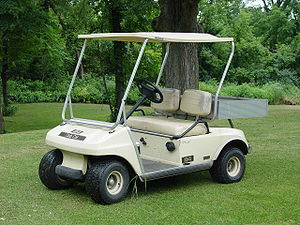
Insuring Your Golf Cart

Cape Cod is home to a few gated communities, condominium complexes, golf courses, and exclusive country clubs. If you own a golf cart for personal use, having the proper coverage is a necessity. A personal golf cart might be your means of moving about your community, a way to get to and from your private beach, getting from green to green on the links (if you can hit them), or just a toy to use at your estate. Whatever the case may be, it is never a bad idea to be properly covered.


Golf cart coverage can protect you in the event of bodily injury or death to someone else because of a golf cart accident. If you rear-end the foursome in front of you on the way to the 18th, you are held responsible for any injuries that occur. Bodily injury liability coverage for your golf cart can protect you from financial loss, legal costs, and bail bond expenses associated with your accident. While a golf cart might seem harmless, accidents and injuries are no joke. If you put a ding in that foursome’s shiny new cart, property damage coverage will protect you against the liability of causing damage to someone else’s property.

If you find yourself upside-down in a sand trap with a few bumps and bruises, golf cart insurance will cover your medical expenses up to selected limits, provided those expenses are reasonable and necessary. Coverage will also include medical care, recovery, rehabilitation, and remedial care. Though I make light of golf car accidents, they do happen. People have been seriously injured and killed because of misuse of golf carts. Take your need for speed to the racetrack!

Golf cart insurance also includes underinsured/uninsured bodily injury coverage. Underinsured/uninsured coverage will pay benefits to your and/or your passengers if you are struck by a golf cart driver who does not have insurance, a golf cart driver whose insurance coverage is less than the loss that results from the accident, or a hit and run golf cart operator that speeds away before they can be identified.

Like an automobile, golf carts are covered in the event of a collision, fire, theft, riot, windstorm, or hail. Should your gated community erupt into riot, and your golf cart becomes collateral damage, be not afraid for you are covered. If your cart incurs damage in the event of any of the above, you could receive up to the cash value of your cart minus your deductible. If your cart is rendered inoperable, coverage extends to the towing and labor associated with moving your cart. Yes, they will pull your cart out of the sand trap, but you might have to foot the bill for the donut marks on the fairway.

Whether you use your cart or the course or in your neighborhood, you should considering golf cart insurance. It might seem frivolous to do so, you need to protect your investments. Carts can cost up to $7,000, it would be a shame to lose that investment because you did not think to buy insurance!

Like us on Facebook and Follow us on Twitter!
Visit our website to see the services we can offer you! www.mmisi.com

Friday, May 24, 2013

Reasons You Need Long-Term Care Coverage


Long-Term Care is hardly on the average person’s mind until it comes time to use it. Today, up to 70% of people 65 and older will need Long-Term Care at some point, and if they are not insured for it, they will be required to pay out of pocket. Long-Term Care costs continue to skyrocket, driving up the need to purchase Long-Term Care insurance.

Without insurance, Long-Term Care recipients would need to possess assets that generate $100,000 to $150,000 in additional funds specifically set aside for Long-Term Care. A vast majority of people do not have these kinds of assets or funds available, deflecting the costs of Long-Term Care to family members, if available. Given the structure of Long-Term Care plans, purchasing Long-Term Care insurance at an early date can provide a world of benefits.

Applying for Long-Term Care insurance early can increase your odds of getting coverage and can increase the value of your plan. Nearly 57% of those over the age of 80 that apply for Long-Term Care insurance are denied coverage. Only 11% of those between 50 and 59 are denied. Do not wait to purchase insurance until it is too late.
 
Purchasing Long-Term Care insurance is like getting a lump sum that you can dip into whenever necessary. If you purchased a policy valued at $600,000 and used $30,000 for whatever reason, you would still have $570,000 leftover to use. When 20% of insured’s require more than 5 years of Long-Term Care, insurance is a worthwhile investment. Buyers also have the option of including inflation protection to guard against rising price indices. As policies operate using daily benefit limits, inflation protection increases these benefits as price levels change. In addition, Long-Term Care insurance plans offer the option of either reimbursement or indemnity benefits. Reimbursements benefits cover actual expenses up to a daily limit, whereas indemnity provides a specific daily amount.

Odds are that at some point in your life, you will need Long-Term Care. Why absorb the costs of the care yourself? At Murray & MacDonald, we have available some of the most renowned Life and Long-Term Care insurance companies including John Hancock, Met Life, and Guardian Life; and certified professionals to serve your needs.

Like us on Facebook
Follow us on Twitter
Visit us at www.mmisi.com

Wednesday, May 22, 2013

Car Seats & Installation

The other day we wrote about using a car seat after a car crash, but what about the day-to-day using a car seat.

Which car seat is right for my child?
What are the "proper" ways to install a car seat?
Who should install the car seat?
How long should a child be rear-facing?
When do you turn a child forward facing?
How long can my child use the car seat?
When should I replace the car seat?

Car seat issues are enough to make your head spin.

We, at Murray & MacDonald Insurance, are licensed insurance agents, we are not licensed car seat installers, testers, etc. We do know a thing or two about safety & car seats.

Today, we're going to share a few reference sites that may help you  answer some of your #carseatangst questions.

1) Which car seat is right for my child? This is a tricky one. It's personal preference, it's the car you drive, it's your lifestyle. Some people love the flexibility of an infant seat while their baby is young, others prefer to use a convertible seat that you don't take in & out.

2) What are the "proper" ways to install a car seat? The link in the question will direct you to a website called www.safercar.gov - they list the correct way to install a car seat with and without the latch.

3) Who should install the car seat? If you don't trust yourself, a car-seat technician can install it, find one here. But, if you are the care-giver on a regular basis, you should learn how to properly install the car-seat. This will give you peace of mind your little one is protected. There are many car seats out there that are much easier to install than they used to be!

For the last 4 questions from above, you should reference the manual. Many car-seats have an expiration date. The car-seats will also state if they are meant for rear-facing or forward-facing and for how long.

The recommendations from Safercar.gov are follows:
  • Birth - 12 months - Your child under age 1 should always ride in a rear-facing car seat. There are different types of rear-facing seats: Infant-only seats can only be used rear-facing. Convertible and 3-in-1 car seats typically  have higher height and weight limits for the rear-facing position, allowing you to keep your child rear-facing for a longer period of time.
  • 1 - 3 years - Keep your child rear-facing as long as possible. It's the best way to keep him or her safe. Your child should remain in a rear-facing car seat until he or she reaches the top height or weight limit allowed by your car seat's manufacturer. Once your child outgrows the rear-facing car seat, your child is ready to travel in a forward-facing car seat with a harness.
  • 4 - 7 years - Keep your child in a forward-facing car seat with a harness until he or she reaches the top height or weight limit allowed by your car seat's manufacturer. Once your child outgrows the forward-facing car seat with a harness, it's time to travel in a booster seat, but still in the back seat.
  • 8 - 12 years - Keep your child in a booster seat until he or she is big enough to fit in a seat belt properly. For a seat belt to fit properly the lap belt must lie snugly across the upper thighs, not cross the neck or face. Remember: your child should still ride in the back seat because it's safer there.

Check out the Facebook page and the Twitter page for more on Child Passenger Safety.

Here are a few videos on rear-facing car crash impacts vs forward facing:
Trygg Trafikk Youtube Video comparison of rear vs forward facing
Youtube video of child who was injured in an accident


Friday, May 17, 2013

Massachusetts' Low Auto Rates!


To say that insurance shoppers aren’t price sensitive in today’s economic turbulence would be a drastic understatement. The introduction of direct-writers into the insurance market has made purchasing car insurance easier and cheaper. Fortunately, for Massachusetts drivers, the state was recently graded as one of the cheapest states to purchase insurance.

Carinsurancequotes.com recently ran a comparison of car insurance rates relative to median household income across all fifty states and found some staggering results. Michigan drivers were paying, on average, 8 percent of their household income for insurance. In Michigan, 2010 median household income was $45,413 meaning drivers were paying, on average, $4,087.18 per year for car insurance. Louisiana was the second most costly state, with drivers paying a rate of 5 percent of median household income. Median household income in 2010 for the state of Louisiana was $42,505 meaning drivers paid $2,125.25 for insurance.

Massachusetts falls on the complete opposite side of the spectrum with a rate of only 1.434% of median household income. Massachusetts median household income for 2012 was $62,072, significantly higher than that of the aforementioned states. As a rate of 1.434%, Massachusetts drivers shelled out, on average, $890.11 for car insurance.

For price sensitive shoppers, it pays to live in Massachusetts!

Like us on Facebook
Follow us on Twitter
Visit us at www.mmisi.com

Wednesday, May 15, 2013

Using a Car Seat After an Accident

Have you been in an accident before? Chances are, you've been in one or witnessed one.
Here is a link to traffic accidents & fatalities over a 10 year period.

Accidents are scary and can cause serous injuries.

Have you been in an accident with a small child? A child in a car seat? Hopefully you haven't, but if you have...

What do you do? What happens?

{image}
After the crash, the people get checked out for injuries and the car is brought to a body shop for repairs.

But what do you do about the car seat? It still looks good. Is it ok to use?


It depends, most likely not, according to Nation Highway Traffic Safety Administration.
Below is what NHTSA says about using a car seat AFTER a crash:

"[A car seat should] be replaced following a moderate or severe crash in order to ensure a continued high level of crash protection for child passengers. Car seats do not automatically need to be replaced following a minor crash.

What defines a minor crash? A minor crash is one in which ALL (emphasis MMISI) of the following apply:
  • The vehicle was able to be driven away from the crash site.
  • The vehicle door nearest the car seat was not damaged.
  • None of the passengers in the vehicle sustained any injuries in the crash.
  • If the vehicle has air bags, the air bags did not deploy during the crash and
  • There is no visible damage to the car seat.

Never use a car seat that has been involved in a moderate to severe crash. Always follow manufacturer’s instructions."

The question - will insurance cover it? Insurance will usually cover a car seat, however it depends from company to company. Check with your insurance agent if you have a concern. Our agency has not had a problem with insurance companies replacing a car seat that was involved in a moderate or severe crash.


Wednesday, March 27, 2013

Cycling Accidents: Who's liable?

Forcing cyclists and drivers to coexist on the roads without incident has long been a societal struggle. We have a hard enough time not crashing into each other, bringing cyclists into the mix creates yet another obstacle to safely avoid on the road. Of the biking accidents that occur annually, approximately 11% of those involve another vehicle. While this might not be alarming, maybe the pattern of where accidents occur will be. Of the 11% of bicycle and vehicle accidents that occur, 45% occur at intersections. These accidents can result from the biker or driver not paying attention, not knowing the rules of the road, or simply not seeing each other. Whatever the case may be, someone has to cover the medical expenses. If you are found to be responsible for the accident, you could be footing the bill.

Sometimes taking the extra precautions isn't enough. Wearing bright clothing, being vigilant of your surroundings, and riding defensively can drastically alter your chances of being involved in an accident. Yet, they're called accidents for a reason. Regardless of who is at fault, you need the assurance that your medical expenses will be covered if necessary.

Bicycles, from a legal perspective, are considered vehicle in nearly every state, hence they must abide by the locale's traffic laws. This means coming to complete stops at stop signs, following traffic signals, acknowledging right of way, among others. While a significant portion of bicycle vs. car accidents come at intersections with stop signs, some do occur because rider and drivers alike refuse to acknowledge right of way. If you are involved in an accident and you interfere with another vehicles right of way, you will most likely be held liable.

Intersections with stop signs account for nearly 20% of accidents occurring at intersections. Accounting for nearly half of that 20% are accidents where the cyclist has a stop sign and the car does not. If you misjudge the distance or speed, or both, of an oncoming car you could end up rocketing through their windshield. Give yourself plenty of time to get up to speed after stopping, there is no need to rush out in front of oncoming traffic. More often than not, you will be held liable for your own medical expenses if you speed out in front of traffic. The other half of these accidents are scenarios where the car has a stop sign and you have the right of way. The driver might not recognize the you, or may misjudge speed and distance, and pull out in front of the you. Provided that you're traveling with traffic an not against it, the driver's insurance company is going to foot the bill for your injuries. If you're riding against traffic (which is against the law) you or the driver may be held liable for the accident.

From an insurance perspective, there are ways to shield yourself from the burden on medical expenses and lost wages in the result of an accident. First and foremost, you should look to the at fault party's auto policy. The Personal Injury Protection provision of your or the driver's auto policy provides injury protection of up to $8,000 regardless of who is at fault for the accident. The provision will also cover up to 75% of gross weekly wages if you can't work as a result of your injuries. Another place to look for coverage would be the Bodily Injury to others provision. Compulsory in Massachusetts, this provisions provides covers for injuries to others through the use of you vehicle up to a $20,000 limit. If you own a car, you can also find coverage in the Uninsured-Underinsured provision of your policy. Though the policy is only applicable if the damages done to you exceed the other parties coverage limits, or if the party doesn't have insurance,there's no reason not to have the coverage considering its scope.

Never leave your fate in the hands of others on the road. As much as you might not want to hear it, you're not Lance Armstrong; so don't ride like it. Wear a helmet, be defensive, wear clothing that will allow drivers to distinguish easily between you and your surroundings, and always be on the lookout for obstacles. Basically, do everything short of strapping on shoulder pads and football helmet to ensure that you're safe on the road. Don't spend months laid up in a hospital bed because you didn't look both ways!

Friday, March 15, 2013

Dog Bite Liability


For most dog owners, the possibility of their dog biting someone may seem next to impossible. Many common dog breeds are tame, friendly, and docile but homeowner’s insurance underwriters are careful when determining what breeds of dogs to exclude from a policy.


In 2011, insurance companies paid out nearly $479 million because of dog bite claims, up nearly $76 million from the previous year. State Farm Insurance, one of the premier homeowner’s writers in the United States, paid out an estimated $109 million for only 3,800 claims; that is an average of nearly $26,000 per claim. The Postal Service racked up $1 million in medical expenses from dog bites last year. Dog bites are not a huge concern for the vast majority of homeowners, but the consequences can be very costly.

Fortunately, dog bites are generally covered under the personal liability provision of a homeowner or renter’s policy. Coverage limits for these types of policies can go as high as $500,000 and extend worldwide. Where dog owners might run into some problems are the breed exclusions. Insurance companies do not provide explicit exclusions for most dog breeds, considering their well-mannered, friendly nature. If you own an American Pit Bull Terrier, German Shepherd, Rottweiler, or Siberian Husky (to name a few), you might have trouble getting coverage. Companies may write in a specific exclusion to relieve them of liability, considering these dog breeds are stereotypically aggressive. On the other hand, some companies may deny cover for the homeowner because of the exposure that a dog bite presents.

Almost 4.7 million people are bitten each year and approximately 800,000 seek medical attention. Less than half require medical attention and approximately 16 die according to the Insurance Information Institute. I would venture to say that a good portion of the bites that require medical attention are minor to moderate, but the severe injuries present a serious, costly exposure clearly exemplified by how much State Farm paid out in 2011.

If your dog isn’t covered by your homeowner’s insurance, you should look into taking preventative measures! Training and socializing your dog can decrease the chances that your dog might bite someone else!